
Dubuque County Criminal Court Cases
The Iowa District Court for Dubuque County hears indictable crimes, misdemeanors, traffic matters, and other state cases. It sits in Judicial District 1A. Iowa uses one unified District Court rather than separate county criminal repositories. A city ordinance or simple misdemeanor may begin with city enforcement, and a city attorney may handle a limited matter, but the judicial file still belongs in Iowa's court system. Serious state charges are prosecuted by the Dubuque County Attorney.
The Clerk of District Court is the custodian of each Dubuque County criminal case file. The file begins when a complaint, trial information, indictment, or other charging paper is filed. It then grows through appearances, motions, pleas, orders, judgment, sentence, and later appeal or postconviction events. An agency's arrest report is separate. It records the enforcement step, while the court docket records what prosecutors filed and what the judge decided.
Opening Dubuque County Case IDs
Iowa Courts Online is the official statewide starting point for a Dubuque County criminal case search. The captured trial-court landing screen shows the public route into that system.
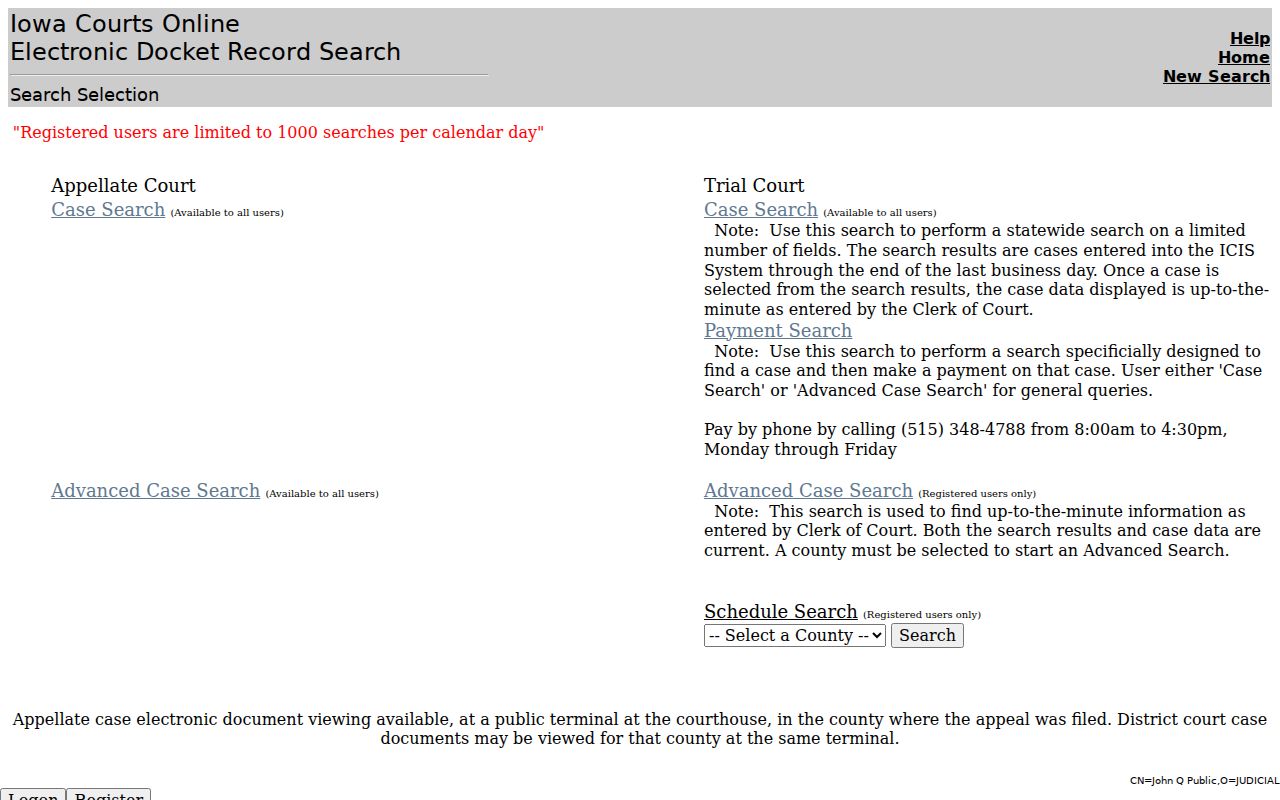
The county and case-type controls help separate a Dubuque filing from a same-name case elsewhere in Iowa. Open the Case ID from the result list. Read the charge, its level, and its disposition as distinct fields. The event list can show when a filing, appearance, hearing, plea, order, or sentence was entered, but a docket entry does not promise that the full document image is available online.
Searching Dubuque County Case Records
Name and Case ID are the two main routes. For a name search, the official help requires at least two letters in Last/Firm Name. Spelling matters. A percent sign works as a contains wildcard, and a first-name initial should be entered without a period. Add the Dubuque County filter, date range, or case type when a common name produces too many court records.
- Open Iowa Courts Online and choose the Trial Court Case Search.
- Enter at least two last-name letters, or use an exact Case ID for the direct route.
- Select Dubuque County and a criminal or traffic case type where those controls appear.
- Open the result and compare each charge with its own status and disposition.
- Ask the Dubuque Clerk of District Court for a certified copy or an attachment that cannot be opened.
| Field label | Type | Required | Options or notes |
|---|---|---|---|
| Last/Firm Name | Text | Yes for name route | At least two letters; % wildcard supported |
| First Name | Text | No | Use an initial without a period |
| Middle Name | Text | No | Helps narrow a common identity |
| AND/OR | Radio | Conditional | AND requires both names; OR returns either |
| County | Dropdown | No | Select Dubuque for local scope |
| Case ID/Number | Text | Alternative | Use an exact identifier when known |
| Case Type | Dropdown | No | Choose criminal or traffic as needed |
| Date range | Date controls | No | Useful for common names |
Note: A name match is a lead, not proof that the court record belongs to the person being researched.
Dubuque Court Links and Terminals
Basic public searching is free, but Iowa Courts Online does not make every court document a free remote download. Some functions require a paid subscriber account. The official help also explains that certain links work only at a clerk's public-access terminal. That distinction matters when the event list names an order or plea but the linked paper will not open from home.
The Dubuque County Clerk directory confirms the local court contact. Its captured contact block provides a direct source for the office that can explain access and supply certified copies.
Call 563-589-4418 or visit the clerk at 720 Central Avenue when a Dubuque County criminal case attachment is inaccessible, a certified disposition is required, or an older file needs staff help. Ask for the case number and the exact document. That is more precise than asking the clerk to interpret a person's whole history.
Inside a Dubuque County Case File
A court case file is a structured account of one prosecution. The header identifies the case. Party and attorney fields show who is involved. Charges and events then explain what was alleged, what was filed, and how the court acted. Financial and schedule links can add assessment, payment, balance, hearing, and location data when public.
| Case header | Case ID, title, Dubuque County, case type, filing date, and status |
|---|---|
| Parties | State and defendant display, with attorneys where listed |
| Charges | Description, level or class, sequence, and charge-specific disposition |
| Docket events | Filings, appearances, hearings, orders, pleas, judgments, and sentence entries |
| Schedule | Public date, time, event type, and location information |
| Financial data | Assessments, payments, and balance functions where available |
| Documents | Public attachments subject to terminal, subscription, and confidentiality limits |
The Iowa Department of Public Safety offers a different product. Its DCI criminal history record check is a statewide fingerprint-supported history released under chapter 692, not a copy of the Dubuque court file.
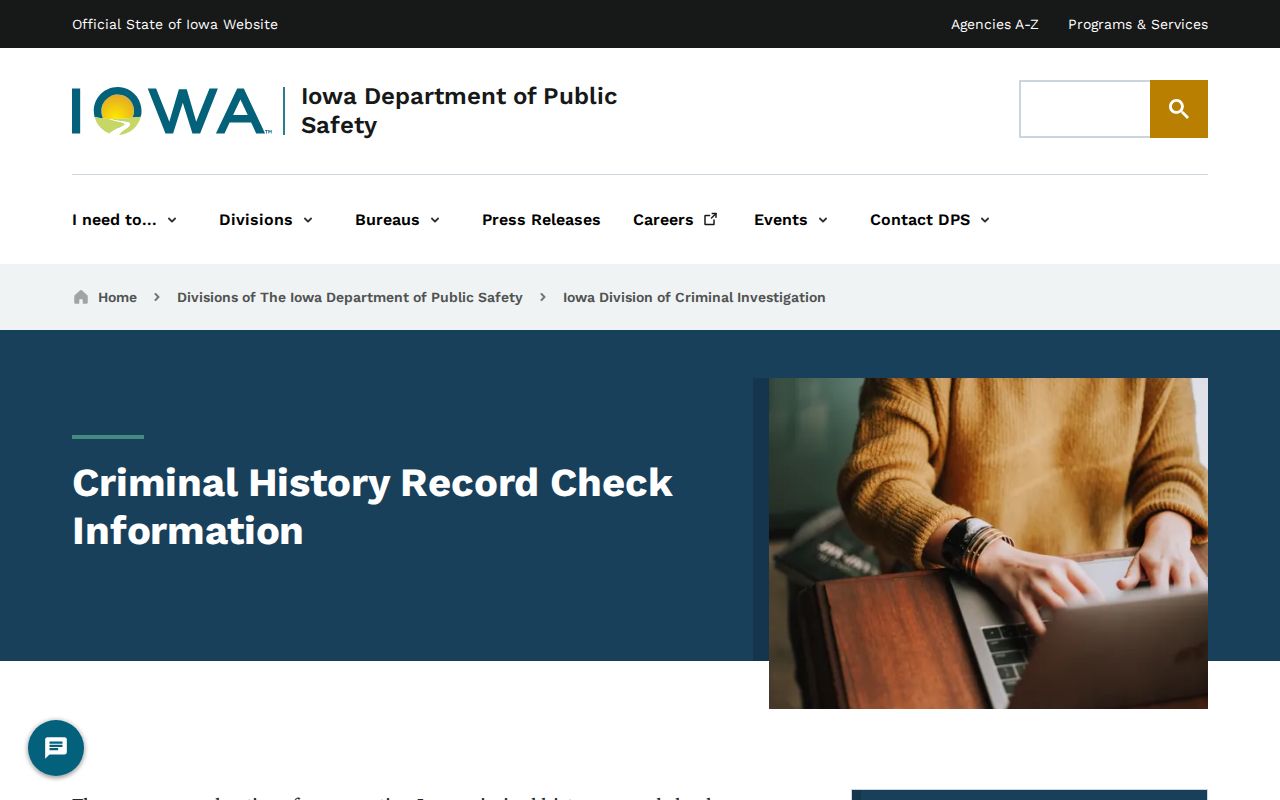
The DCI screen reinforces why court and repository records should not be treated as interchangeable. For the filed charge, docket text, and certified outcome, use the clerk's case file.
Dubuque Criminal Docket Terms
Disposition words carry more weight than a charge label. A single Dubuque County case can have a different outcome for each count. Read the status beside the correct charge and date rather than drawing a conclusion from the case title alone.
- Dismissed
- The charge ended without a conviction.
- Acquitted or not guilty
- An adjudication ended without a guilty finding.
- Guilty or convicted
- The court entered a conviction on that charge.
- Deferred judgment
- Successful discharge is a non-conviction, though DCI keeps a discharged notation with separate release rules.
- Pending
- The Dubuque County criminal charge has not reached a final disposition and does not prove guilt.
A missing disposition may reflect reporting delay, a spelling or alias issue, or a case that is restricted. Verify it with the clerk. If the court outcome is correct but a DCI history lacks it, the repository has a separate dispute process and may request fingerprints.
How a Criminal Case Moves
A Dubuque County prosecution can start with a complaint, arrest, or summons. An initial appearance addresses the first court steps. The prosecutor then makes an independent charging decision and may file a trial information or proceed by indictment where applicable. Arraignment follows formal charges. Discovery and motions shape the pretrial phase before a plea or trial produces a disposition.
Case flow: Charges Filed › Arraignment › Pretrial › Plea or Trial › Disposition › Sentencing
The judgment and sentence are judicial acts. Later appeal or postconviction entries can extend the docket. The sequence also explains why a booking may appear before a Dubuque County criminal case does, and why an arrest label should never be copied forward as though it were the final adjudicated offense.
Dubuque Court Timing and Prosecution
The Dubuque County Attorney reviews charges and prosecutes Iowa crimes and county ordinance violations. The office also handles juvenile delinquency and other public duties, but it does not serve as the general clerk or provide private defense advice.
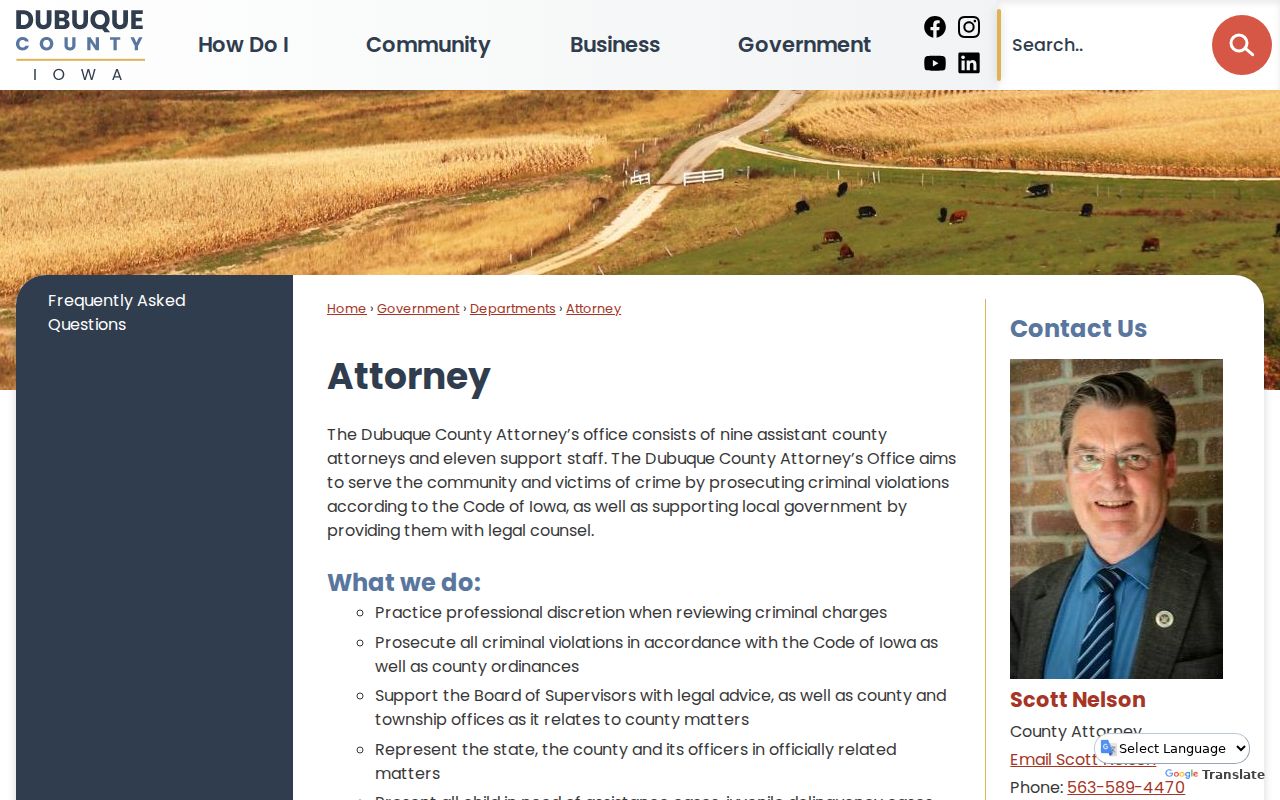
The office's published guidance sends general case-information questions to Iowa Courts Online or the clerk. It says lesser matters may finish in roughly two to four months, while serious cases can last two to three years. A reset is not itself an outcome. Lawyers, witnesses, and court schedules may need coordination before a hearing can proceed.
The Dubuque State Public Defender is a separate office at 590 Iowa Street, Suite 1. A person who seeks court-appointed counsel completes an Affidavit of Financial Status at the initial appearance. After that hearing, the clerk can explain how to complete and file the affidavit. The judge makes the appointment. Those entries may appear in the case chronology, but the public docket should not be read as a substitute for advice from appointed counsel.
Dubuque County is also served by First District programs that include Drug Courts and Domestic Violence Courts, plus pretrial, mental-health, substance-use, and supervision services. A docket may reflect court-ordered participation. Program eligibility comes from court and corrections decisions, not from a public self-enrollment request.
Case Record Access & Restrictions
Iowa Code chapter 22 establishes public-record inspection and copying rights, but court access also follows Judicial Branch rules. Iowa Court Rule chapter 16 keeps protected personal and confidential data out of electronic public access and requires filers to protect it. Juvenile cases, sealed or expunged matters, and protected identifiers may be absent or limited. That is a legal access boundary, not proof that a Dubuque County court case never existed.
Iowa Code chapter 22 grants access subject to confidentiality rules. Chapter 692 separately controls criminal-history dissemination. Court records remain governed by court rules and orders.
The county's public-records request channel can route county-held material, but it does not replace the clerk for judicial records. Start at the portal, then ask the specific custodian for the exact paper. Accept lawful redaction and request the legal basis if access is denied.
Federal Cases Beyond Dubuque Courts
Dubuque County lies in the Northern District of Iowa. A federal criminal filing does not reliably appear in Iowa Courts Online, so the court system must match the jurisdiction. PACER is the official federal docket service. Registration is required, and current fees and quarterly waiver thresholds come from PACER.
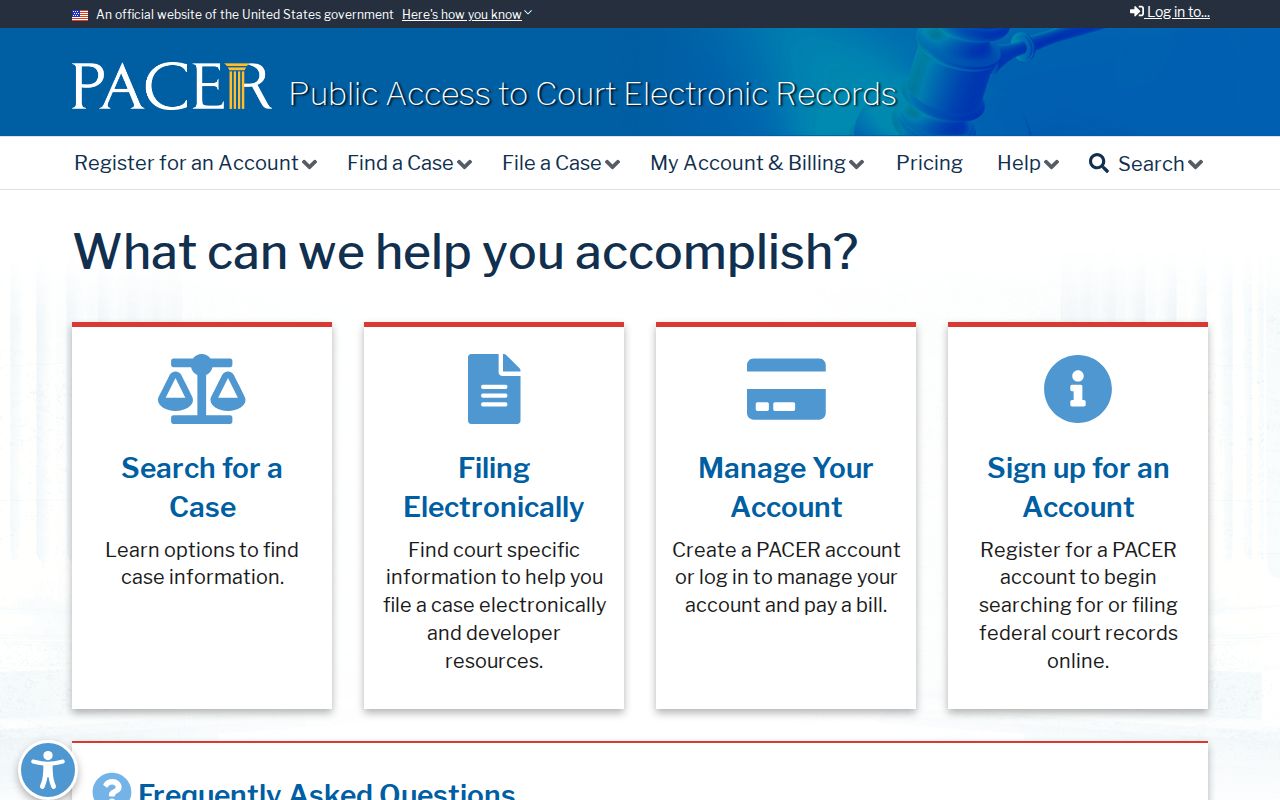
PACER holds case-level federal filings. It is not the same as the FBI's subject-only Identity History Summary. That fingerprint-based history uses the FBI electronic ordering portal and reaches beyond Iowa, but it serves personal identity-history review rather than public docket research.
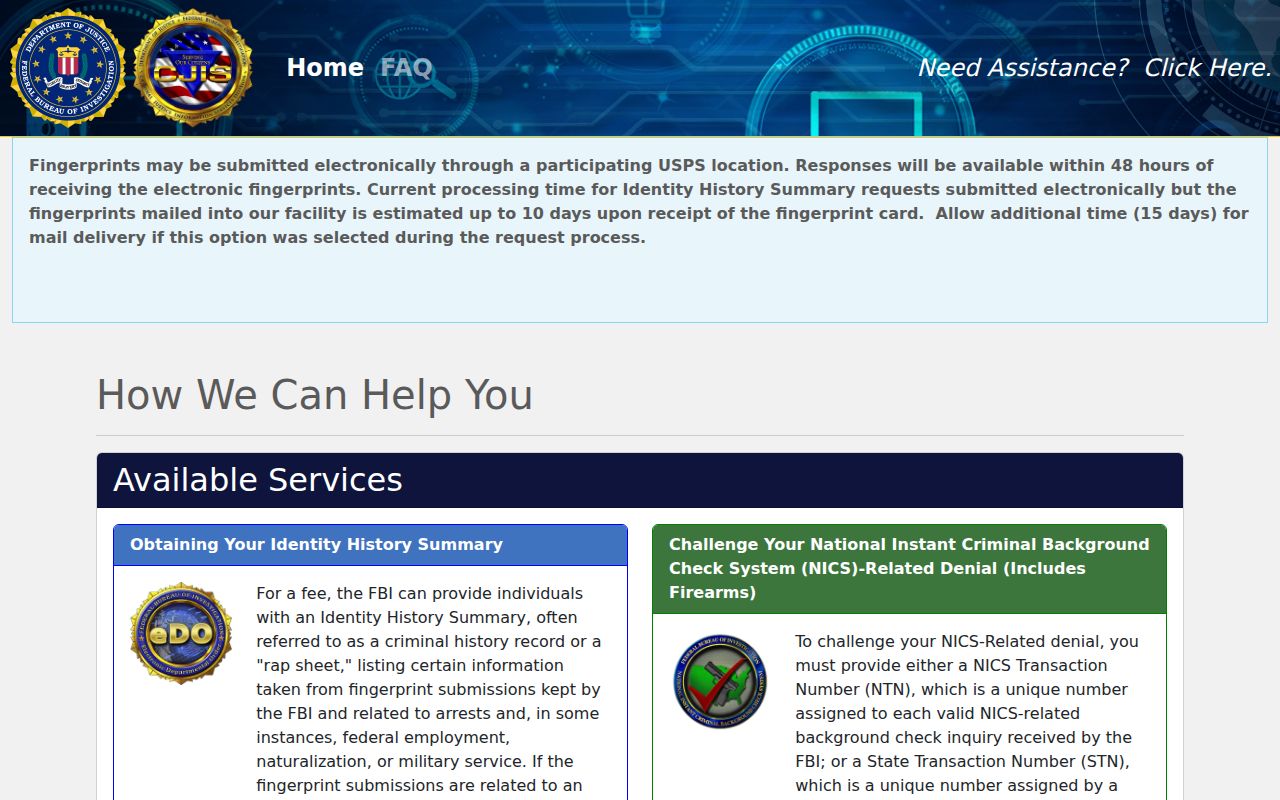
Choose the source by the question. Use Iowa Courts Online and the Dubuque clerk for state court cases, PACER for federal case files, and the FBI process for a fingerprint-based review of one's own national identity history.